


City street
City street
Roads are the lifeblood of the economy, and when designing road lighting, the primary consideration is lighting intensity, followed by environmental protection and control. There are relevant illumination standards aimed at ensuring good visibility of the road surface, while also allowing for innovative lighting designs for different types of streets. Each road should have a unique lighting plan. The application effect of lighting fixtures with different color temperatures on the road is also different, and low color temperature fixtures have better penetration effect in rainy and foggy weather. Combined with intelligent lighting system management, time management and data statistics can be performed on road lamps, and even the function of increasing brightness when vehicles pass by can be achieved through sensors.
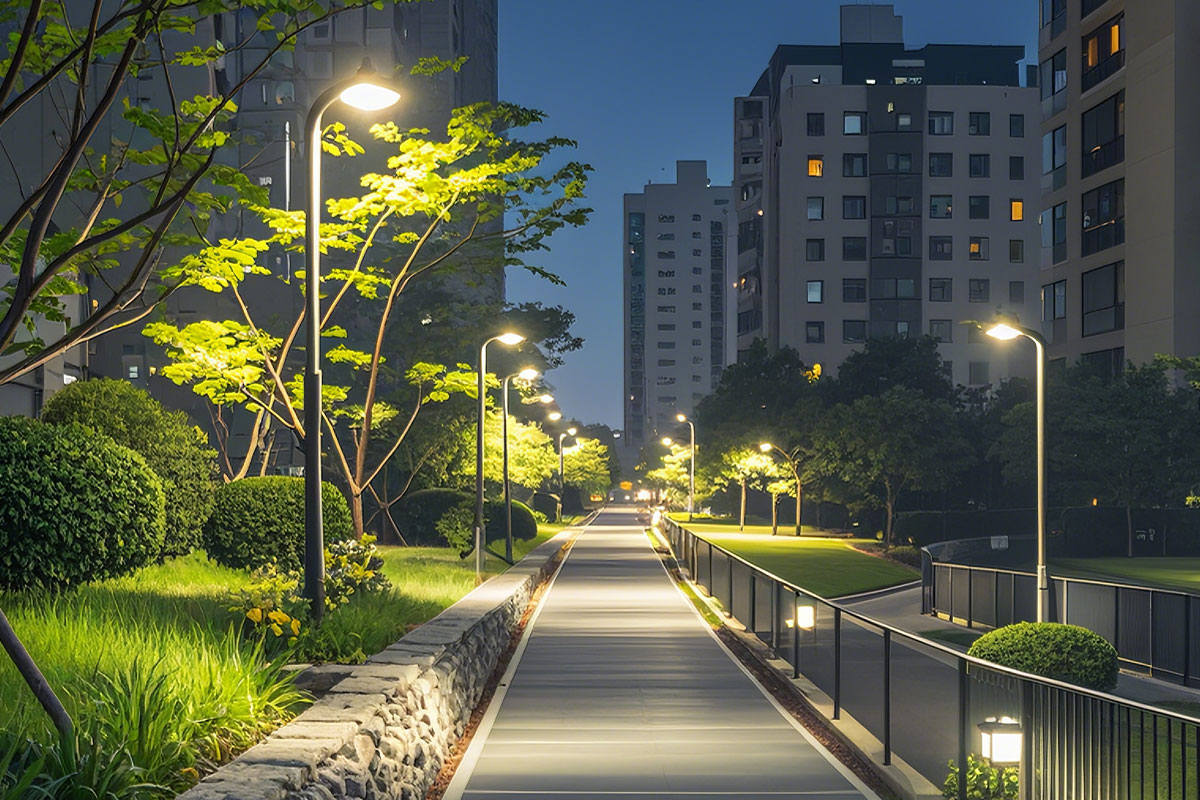
Roads are the lifeline of economic development and play a crucial role in it. As the carrier of the economic lifeline, roads play a crucial role in the sustainable development of the economy. The demand for road lighting is huge and long-term, so energy conservation has become an urgent goal. In the early stage of road lighting planning, it is necessary to fully consider factors such as energy conservation, economic sustainability, and advanced technology, calculate based on various factors, adopt scientific and reasonable management methods, and actively promote various energy-saving and efficient products to reduce energy loss in road lighting and achieve the goal of energy conservation and consumption reduction.
Road Lamp Lighting Design
1. Before designing a road lighting system, careful investigation and survey work must be carried out to understand information such as the type, layout, road surface reflectivity, and traffic conditions of the road. Reasonably distinguish between main roads and branch roads, determine appropriate management methods, and evaluate factors such as traffic flow and vehicle speed.
2. When designing road lighting, attention should be paid to the average brightness of the road surface, the uniformity of light distribution, technical requirements, glare control level, and the impact of lighting facility layout on road lighting design. Only through scientific, rational, and high-quality design can energy efficiency be effectively improved, energy consumption be reduced, and energy-saving effects be achieved.
3. The height of road lighting fixtures should be reasonably determined based on the needs of road use, including the average illuminance and the spacing between lamp posts, to ensure brightness and avoid energy waste caused by overly dense lighting fixtures.
4. When considering the lighting of road blocks, environmental factors must be fully taken into account, as these areas typically have many commercial districts and residents. When choosing lighting equipment, it is advisable to choose an intelligent and adjustable lighting system to meet the lighting brightness requirements during different time periods.
5. New energy LED lighting fixtures can be used as much as possible to illuminate road blocks, which not only achieves energy conservation and environmental protection during use, but also maximizes the savings in labor costs required for construction wiring and avoids construction expenses.
Road lighting should have a landscape effect during both day and night, and the design of streetlight poles and fixtures should be coordinated with the cultural or functional aspects of the street architecture. The layout, brightness, color, and uniformity of street lamps for road lighting need to be reasonably matched to make them a part of road landscape lighting. The sidewalk near the red line can be decorated with trail lights or lawn lights to provide light for pedestrians at night. Some cities construct large light sculptures at intersections or roundabouts, which have beautiful shapes and bright lights, becoming highlights of urban night scenes. They not only serve as traffic indicators but also have the function of passage.
If you need to learn more details about the plan, you can contact us on this website.


